
Precision Rhinoplasty Using Piezoelectric Technology
Rhinoplasty is one of the most technically demanding procedures in facial plastic surgery. Small changes to the nasal bones, cartilage, and soft tissues can have a significant effect on both the appearance and function of the nose.
Ultrasonic rhinoplasty, also known as piezorhinoplasty or piezoelectric rhinoplasty, is an advanced technique that allows the nasal bones to be reshaped with exceptional precision.
Dr. Zachary Farhood offers ultrasonic rhinoplasty in Seattle for patients seeking natural, individualized results using modern rhinoplasty techniques. Serving patients throughout Seattle, Bellevue, Kirkland, Redmond, Mercer Island, Tacoma, Everett, and the greater Puget Sound area, as well as patients traveling from elsewhere in Washington, Oregon, Alaska, Idaho, British Columbia, and beyond. Dr. Farhood approaches rhinoplasty with the goal of creating a nose that complements the patient's facial proportions while preserving—or improving—nasal function.
What Is Ultrasonic Rhinoplasty?
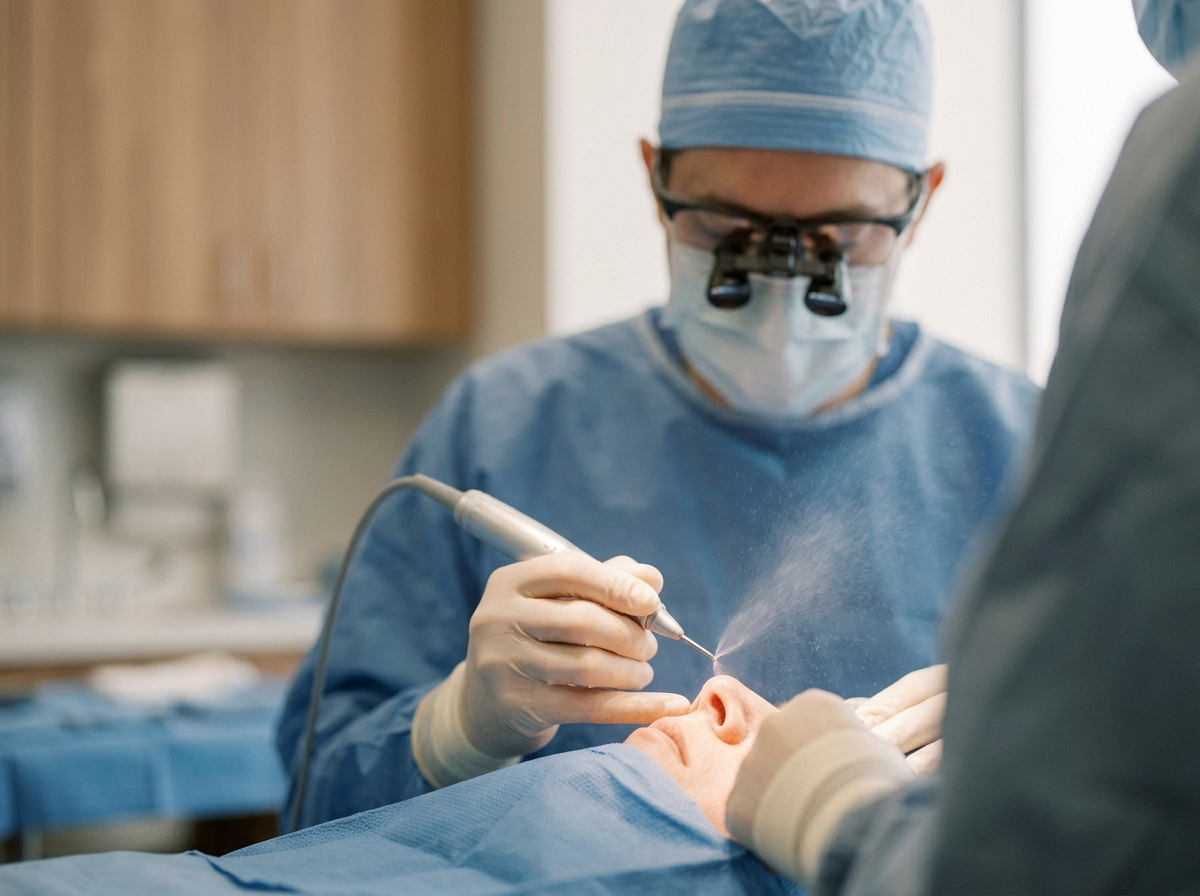
Traditional rhinoplasty often requires specialized surgical instruments to reshape or reposition the nasal bones. Ultrasonic rhinoplasty uses a piezoelectric device that produces high-frequency ultrasonic vibrations to precisely sculpt and cut bone.
The technology is designed to act selectively on mineralized tissue such as bone while minimizing injury to surrounding soft tissues.
For the surgeon, this provides a high degree of control when narrowing, contouring, or repositioning the nasal bones.
For the patient, this precise approach may translate into less trauma to the tissues surrounding the nose during the bony portion of rhinoplasty.
One of the primary advantages of piezoelectric rhinoplasty is precision.
The nasal bones are only millimeters thick, and subtle differences in their shape or position can dramatically influence the final appearance of the nose. Ultrasonic instruments allow the surgeon to sculpt the nasal bones in a controlled fashion rather than relying exclusively on traditional osteotomy techniques.
What Are the Advantages of Ultrasonic Rhinoplasty?
Potential advantages include:
Precise contouring of the nasal bones
Controlled narrowing or repositioning of the nasal bridge
Reduced trauma to surrounding soft tissues
Less postoperative swelling and bruising in some patients
Improved visualization during bony reshaping
Greater control when correcting asymmetric or irregular nasal bones
Recent studies comparing piezoelectric and conventional osteotomies have found lower early postoperative swelling, bruising, and pain with ultrasonic techniques, although an individual's recovery still depends on the extent of surgery and many patient-specific factors.
Is Ultrasonic Rhinoplasty Better Than Traditional Rhinoplasty?
Ultrasonic technology is a tool—not a substitute for surgical judgment or rhinoplasty experience.
There are situations in which ultrasonic instruments provide significant advantages, particularly when precise modification of the nasal bones is required. Other portions of rhinoplasty involve reshaping cartilage, modifying the nasal tip, correcting the septum, or improving the airway, and these steps require entirely different techniques.
The best rhinoplasty therefore does not come from using one particular device. It comes from selecting the appropriate combination of techniques for each patient's anatomy.
Dr. Farhood incorporates ultrasonic technology when he believes it can improve precision and help accomplish the patient's surgical goals.
Who Is a Candidate for Ultrasonic Rhinoplasty?
Ultrasonic rhinoplasty may be appropriate for patients undergoing primary or revision rhinoplasty when modification of the nasal bones is part of the surgical plan.
Candidates may include patients who want to:
Reduce a nasal hump
Narrow a wide nasal bridge
Straighten a crooked nose
Improve nasal symmetry
Refine the overall proportions of the nose
Correct changes related to previous nasal trauma or surgery
During your consultation, Dr. Farhood will evaluate the external appearance of the nose as well as the internal nasal structures and breathing.
Not every rhinoplasty requires extensive work on the nasal bones, which means ultrasonic technology may play a major role in some operations and a smaller role in others.
Frequently asked questions
-
Yes. The terms ultrasonic rhinoplasty, piezorhinoplasty, and piezoelectric rhinoplasty generally refer to the use of piezoelectric ultrasonic instruments to reshape the nasal bones during rhinoplasty.
-
In many rhinoplasty procedures, the nasal bones must be precisely cut or repositioned. These controlled surgical cuts are called osteotomies. Ultrasonic instruments allow the surgeon to perform or modify these osteotomies with precise control.
-
Research comparing piezoelectric and conventional osteotomies suggests that patients undergoing piezoelectric techniques may experience less pain, bruising, and swelling during the early recovery period. However, individual experiences vary, and pain after rhinoplasty is generally influenced by the overall extent of surgery.
-
It may. Studies have demonstrated reduced early bruising and swelling with piezoelectric osteotomies compared with conventional techniques. Bruising can still occur, and ultrasonic technology should not be viewed as a guarantee of a bruise-free recovery.
-
Ultrasonic instruments can help precisely reshape asymmetric nasal bones, but a crooked nose frequently involves more than bone. The septum, nasal cartilage, tip, and underlying facial asymmetry may all contribute. Correcting a crooked nose therefore usually requires a comprehensive rhinoplasty strategy.
-
Ultrasonic technology itself primarily assists with reshaping the nasal bones. If breathing problems are present, procedures such as septoplasty, nasal valve reconstruction, turbinate treatment, or structural grafting may be incorporated into the rhinoplasty when appropriate.
-
Yes. Piezoelectric instruments can be useful during selected revision rhinoplasty procedures, particularly when precise modification of the nasal bones is necessary. Revision rhinoplasty is highly individualized because previous surgery can significantly alter the nasal anatomy.
-
Surgical time depends primarily on the complexity of the rhinoplasty rather than whether ultrasonic instruments are used. Primary rhinoplasty, functional rhinoplasty, and complex revision rhinoplasty can require very different amounts of time.
-
Most visible postoperative swelling improves significantly during the first several weeks. Subtle nasal swelling can continue to improve for many months, with final refinement often taking approximately one year or longer.
-
The cost of rhinoplasty depends on the complexity of the procedure, whether functional nasal surgery is required, whether the operation is primary or revision rhinoplasty, facility and anesthesia fees, and the anticipated surgical time. After your consultation and surgical plan are established, the office can provide a detailed cost estimate.